Mein Name ist Doda und ich bin eine passionierte Barbie-Sammlerin
(bevorzugt Steffie-Face). Auf DodaDolls findet ihr Fotos aus meiner
Sammlung, Puppenunikate, seltene Barbies und Accessoires, Diorama-
sowie Fashion-Inspirationen. In meinem DollFinder (Puppen-Suche)
möchte ich Euch helfen, Eure Wunschpuppe zu finden und nach Hause zu
holen. Als Kind hatte ich einige wenige Barbies, da sich meine Eltern
nicht wirklich welche leisten konnten. Meine Lieblinge waren Geschenke
von Bekannten meiner Eltern aus den 70ern, die bereits von deren
Kindern bespielt worden waren. Ich verliebte mich als 8-Jährige in
eine Jewel Secrets Whitney / Prinzessin Laura und schwor mir insgeheim
diese Puppe zu kaufen sobald ich erwachsen bin. Mehr als 20 Jahre
später bestaune ich meine kleine aber feine Steffie-Face Sammlung an
verpackten und unverpackten Barbies. Auch einige Fashionistas haben es
mir angetan. Mit viel Freude fotografiere ich meine Mädels und baue
Räumlichkeiten für ihre Puppenevents. Auf Youtube findet ihr meine
Deboxing Videos der mir liebsten Puppen, Kleider, Möbelsets und
Accessoires. Ich lade Euch ein auf eine farbenfrohe Reise in die
virtuelle Welt der DodaDolls!
Who's DodaDolls?
My name is Doda and I am a passionate and avid Barbie collector
(preferably Steffie mold). You can find pictures of my collection, one
of a kind doll creations, rare Barbies and accessories, as well as
diorama inspirations on my page. My DollFinder shall assist your
search for your perfect doll. I want to help you bring your dream doll
home! When I was young I only had a few Barbies since my parents could
not afford them. Some of my favourites included vintage dolls from the
70ies that my parents' friends had given us as a gift (and which had
been played with by their own children). When I was around 8 years old
I fell in love with Jewel Secrets Whitney and made a silent promise to
myself: "When I grow up, I shall get all the Barbies I always dreamed
of." Over 20 years later I can look at a small but solid collection of
boxed and unboxed Steffie mold dolls, Barbies and Fashionistas. It
gives me enormous joy to photograph and pose my hybrid dolls or create
rooms for their doll events. You can find my deboxing videos on
Youtube, which mostly show my favourite Barbie dolls, fashions,
playsets and accessoires. Let me invite you on a colourful trip into
the amazing world of DodaDolls!
🇬🇧
May 2025 - As Barbie collecting grows more expensive and ethically complex, collectors face tough questions about value, legacy, and responsibility. From Bill Greening's nostalgic auction to troubling factory conditions, the pink dream is revealing some cracks in 2025.
Barbie at a Crossroads: Bill Greening’s Legacy and the Rising Cost of Collecting
In this blog post, I want to explore two major topics that have recently stirred the Barbie community. The ever-evolving world of Barbie collecting has been impacted by this year’s political and economic developments, prompting collectors to reflect—and in some cases, worry. From Bill Greening's departure from Mattel and the auctioning off of part of his private doll collection, to the increasing production costs of new doll releases, we are currently navigating a landscape where our passion meets an unstable economic reality.
It’s not uncommon to see people express surprise or disbelief at how “cheap” Barbie was when she first launched. Many seem unaware of how inflation works—or that the value of a dollar shifts dramatically over time. The concept of “purchasing power” (or Kaufkraft, as it’s known in German) seems foreign to them.
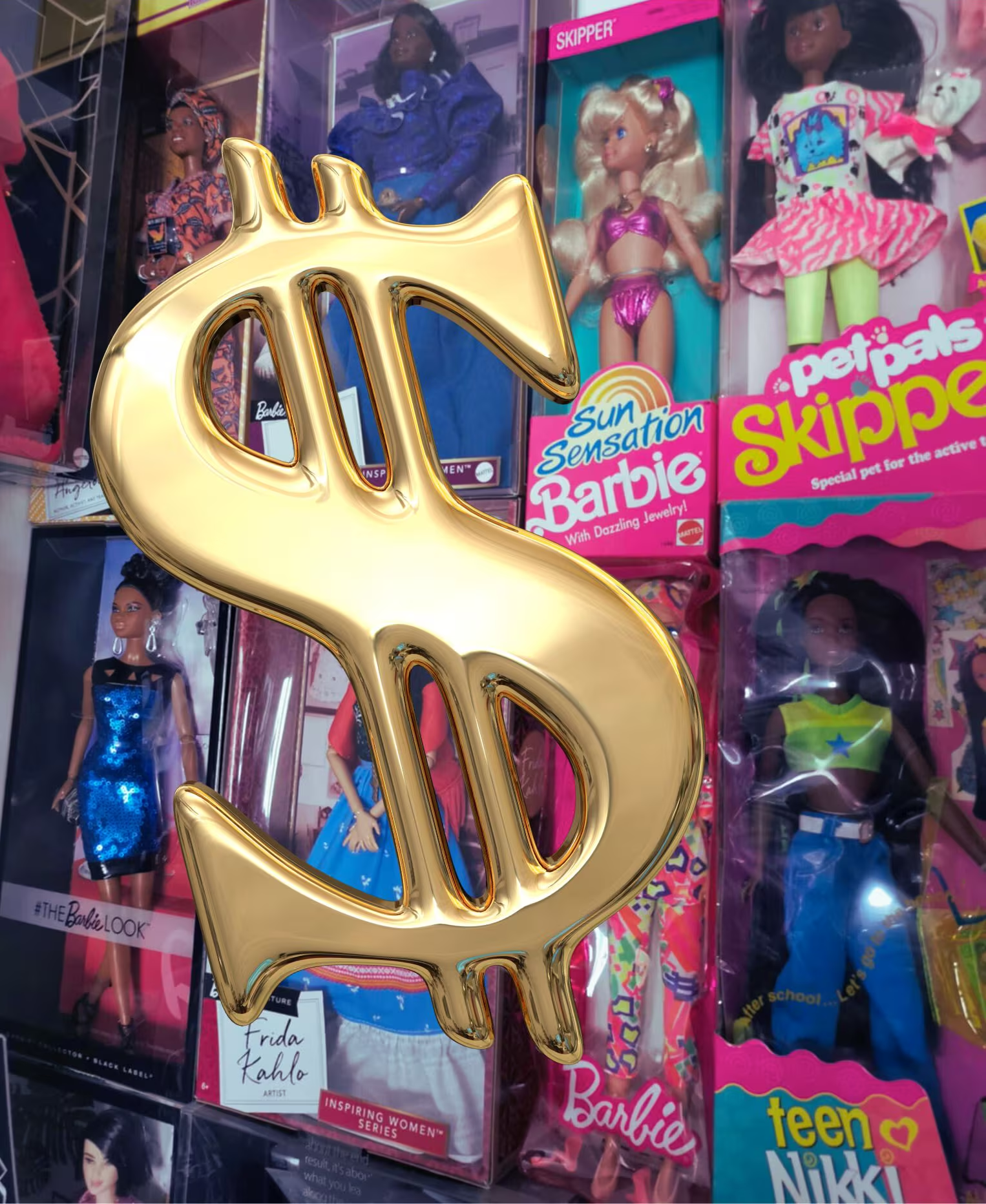
When Barbie debuted in 1959, she was priced at $3—a figure that translates to approximately $24-$30 in today’s dollars when adjusted for inflation. At the time, the marketing strategy was to make her accessible and sell the real profit-maker: her wardrobe. So the doll itself was never intended to be a luxury item.
Fast forward to 2025, and the average Barbie doll retails between $14 and $25, depending on edition and included accessories. While this suggests a modest increase, prices for collector and limited-edition dolls have risen significantly faster than inflation, signaling a shift in Mattel’s pricing strategy.
(An interesting article by Jeremy Horpedahl, "Barbie Dolls and Women's Wages," explores the economic progress of women since Barbie's debut. His analysis underscores how Barbie's history parallels women's advancements in the workforce. It suggests that Barbie is not just a toy but also a symbol of evolving economic empowerment. Read more here: barbie-dolls-and-womens-wages)
Behind the Glamour: Sad Factory Realities
Amidst these economic shifts, a recent documentary has cast a sobering light on the conditions in some of the Chinese factories where Barbie dolls are produced. Investigations have revealed that workers handle scalding hot plastic without adequate protective gear, resulting in immediate burns and blisters and exposing them to long-term health risks.
("Barbie’s Dirty Secrets: Dispatches", aired on Channel 4 in October 2024. This undercover investigation exposed hazardous working conditions at Mattel's factory in Dongguan, China. The documentary also highlighted issues such as excessive overtime, low wages, and a culture of fear and pressure among employees.)
For a visual perspective, 60 Minutes Australia released a segment titled "Inside Mattel's Barbie Doll Factory in China", which provides further insight into the factory conditions:
Such revelations deeply challenge the brand’s carefully cultivated image and raise ethical concerns for collectors and consumers alike. It begs the question: Is it worth buying newly produced dolls if they not only suffer from quality control issues—wonky eye paint, uneven seams, odd matte indentations—but also pose risks to the very workers who make them?
Many collectors are turning to older doll lines, not only for nostalgic reasons, but also with the hope (or belief) that past production practices may have been more regulated, slow and humane.
The Price of Nostalgia: Bill Greening's Legacy and Market Implications
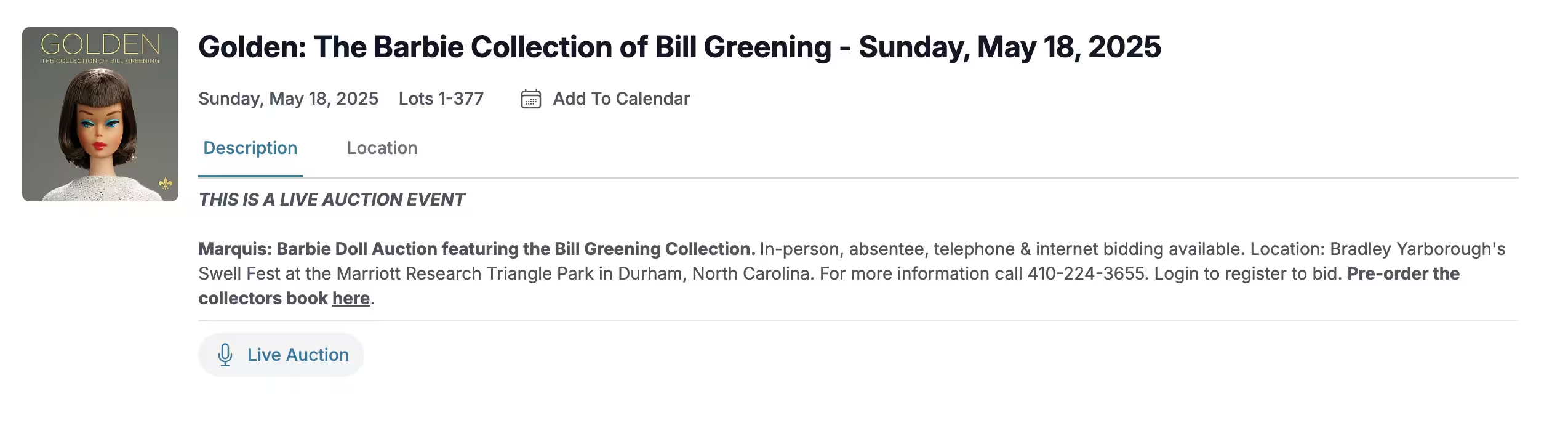
The recent departure of one of Mattel’s most beloved designers, Bill Greening, and the auctioning off of selected dolls from his personal collection, have sent ripples through the Barbie world. Inspired by 1980s legends like Kitty Black Perkins, Greening’s dolls and designs are not only stunning—they’ve become cultural touchstones for an entire generation of collectors.
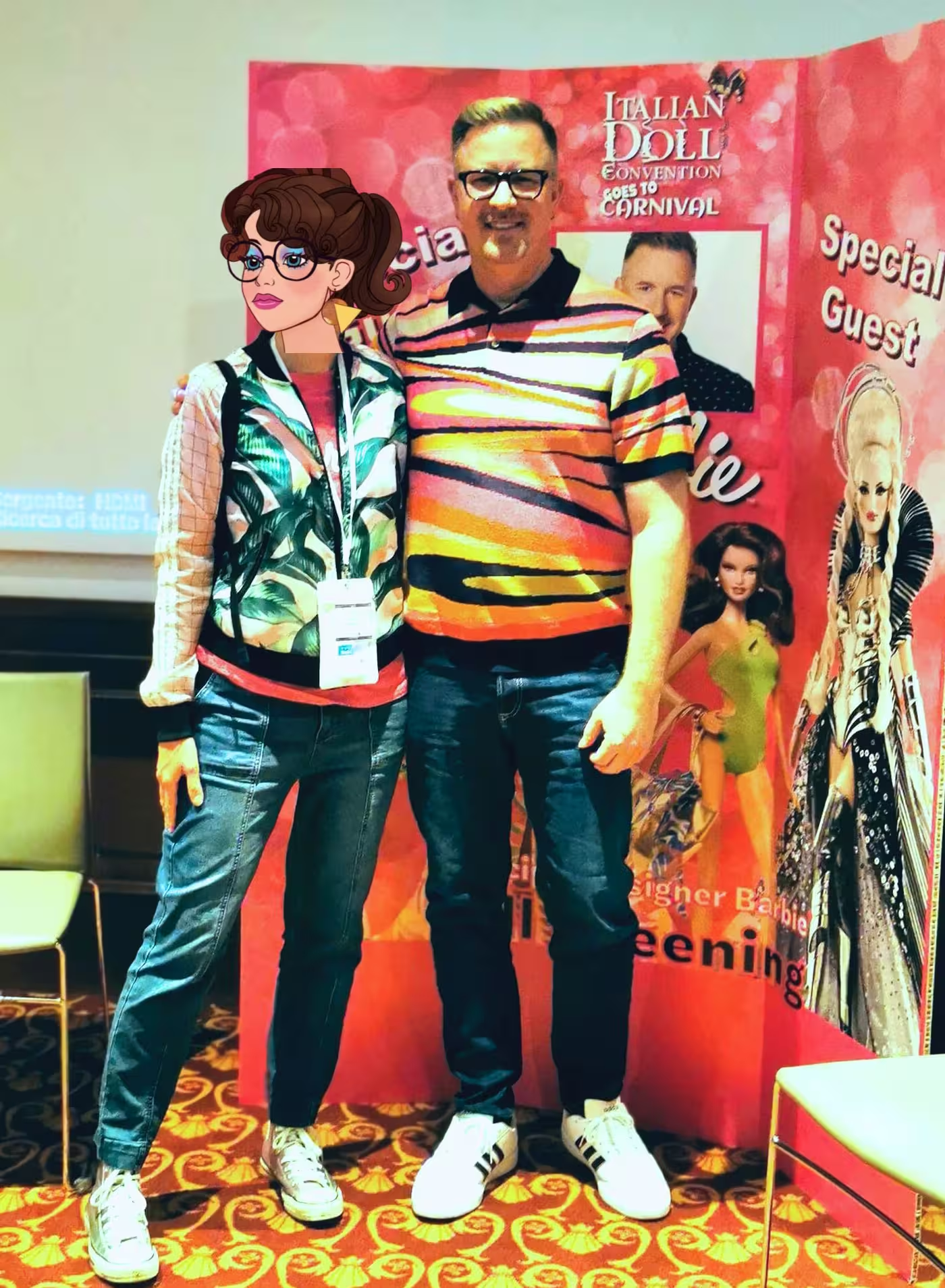
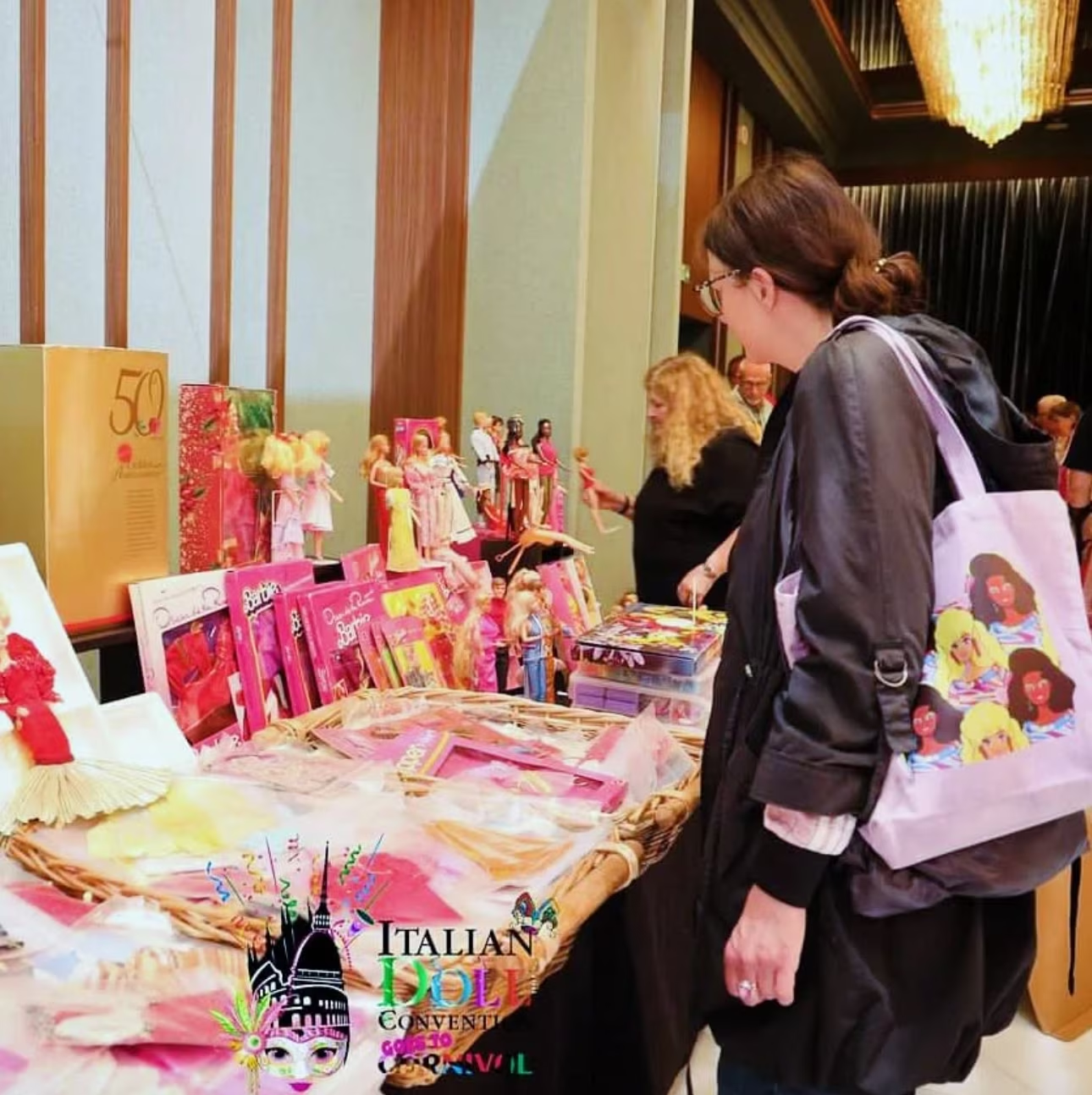
I was lucky enough to meet him at the 2024 Milano Doll Convention, where his passion for Barbie lit up the entire event. I remember seeing his joy as he rummaged through ‘70s and ‘80s treasures in the Sunday morning doll sales room. His genuine enthusiasm was infectious, especially in the talks and interviews he gave during the presentation slots at the convention.
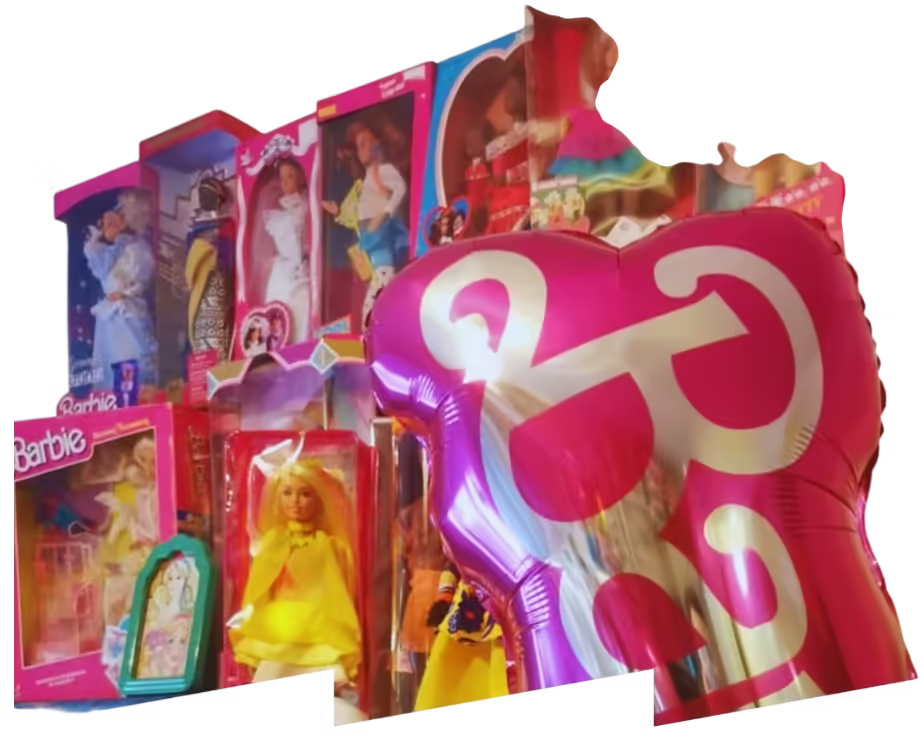
The auctioning of his vintage dolls highlights the increasing commodification of Barbie, where emotional and artistic value now competes with market dynamics. Or perhaps—as many collectors can relate—Bill simply ran out of space. Collecting Barbie demands not just emotional investment, but literal square footage. Not everybody can or wants to afford this in the long-term.
There comes a point in every collector’s journey when the desire to downsize—or to refine a collection around pieces that truly spark joy—naturally arises. By Bill’s own admission, that moment has arrived for him, inspiring the decision to pass some of his beloved Barbies on to new caretakers and homes.
This moment in Mattel history has sparked introspection in some of us: Are we witnessing the end of an era, where designs were shaped by personal vision and human touch? Will future doll lines be AI-generated and algorithmically driven? Are we moving from storytelling to something else, something yet intangible?
As the Barbie landscape changes, we—as collectors—are called to examine our role within this glittering pink nostalgia economy. Balancing passion with ethics is a goal worth pursuing. Many in the community are now advocating for more ethical production practices, supporting independent artists and brands that prioritize sustainability and worker rights.
Engaging with others—on Facebook, Instagram, Reddit, and beyond—helps keep the culture vibrant and informed. Sharing insights, raising awareness, and staying curious can lead to a more mindful and inclusive collecting experience.
At its heart, collecting is about connection and enrichment—personal, cultural, and communal. Let’s keep it that way.
💕 Let me know what you think and share this article if you want to discuss it with fellow Barbie lovers, friends or family!
Love Dolls, Drops, Thoughts and Stories?
Join the DodaDolls newsletter for new blog posts, special releases, and curated Barbie madness.
Only meaningful updates, carefully curated.